We have all been there. You drop your vehicle off for a “quick” routine service, only to have the mechanic walk out with a grim look on their face. The repair is going to take three days, the parts are on backorder, and you still have to pick up the kids from soccer practice in two hours.
This is the exact moment where the words “loaner car” become the most beautiful phrase in the English language.
But for something so common in the automotive world, there is a lot of confusion surrounding these vehicles. Are they free? Does your insurance cover them? And perhaps the most interesting question for car shoppers: is buying a retired service loaner a brilliant hack or a risky gamble?
I have spent years navigating dealership service departments and automotive sales floors. In this guide, we are going to break down exactly what a loaner car is, how to make sure you get one, and whether you should consider parking one permanently in your driveway.
What Exactly Is a Loaner Car?
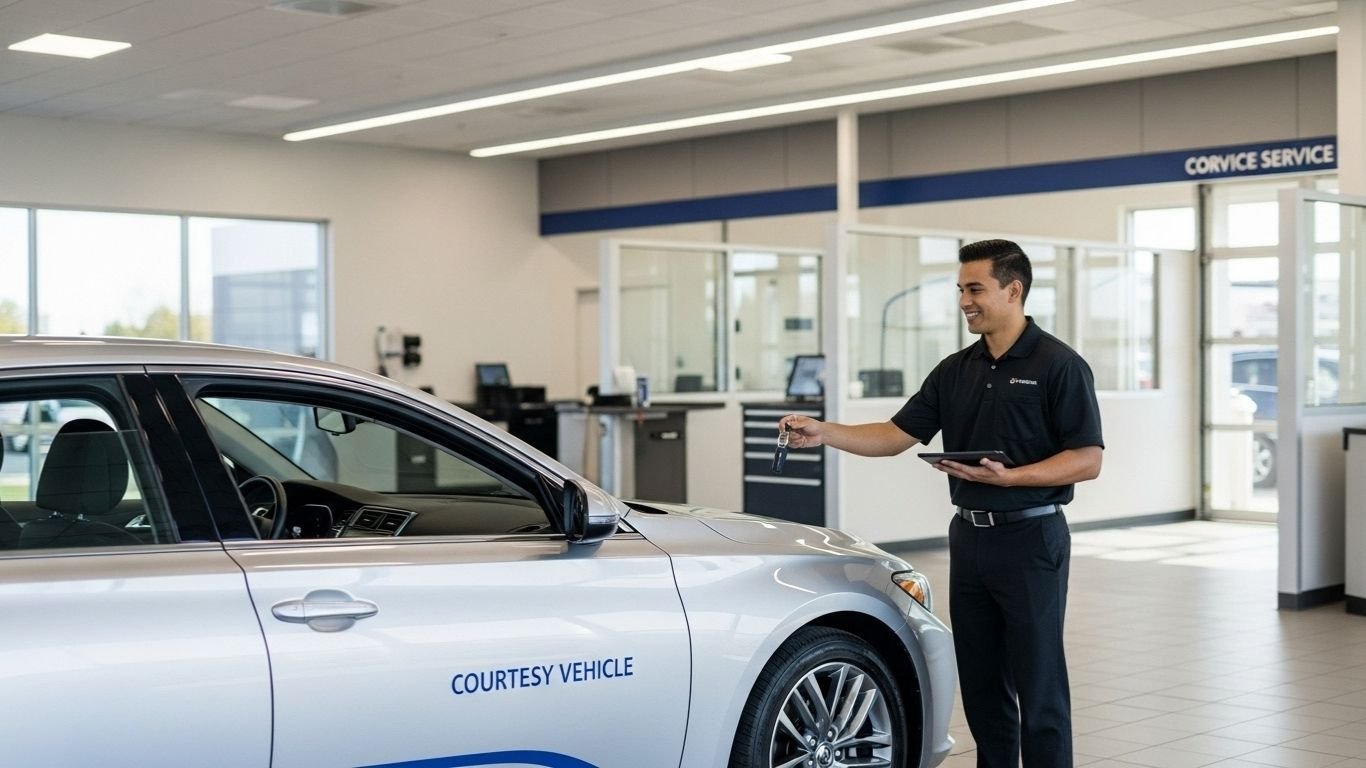
At its simplest level, a loaner car (often called a “courtesy vehicle”) is a car owned by a dealership that they lend to customers while their personal vehicle is being serviced.
Think of it as a bridge. It keeps your life moving while your car is stuck on a lift.
However, it is important to distinguish a true loaner from a rental.
Loaner Car vs. Rental Car: What’s the Difference?
While both get you from point A to point B, the backend logistics are different.
- The Loaner: This car belongs to the dealership’s inventory. It is usually a current model year vehicle with low miles. The dealership covers the cost of ownership, and in most cases, they provide it to you free of charge as a perk of doing business with them.
- The Rental: Sometimes, a dealership doesn’t have a fleet of their own cars. Instead, they have a contract with a nearby Enterprise or Hertz. In this scenario, they might pay for your rental, but you are signing a contract with a third-party rental agency, not the dealer.
When Do You Get One?
You usually won’t get a loaner for a 30-minute oil change. These vehicles are typically reserved for:
- Major repairs taking more than a day.
- Warranty work mandated by the manufacturer.
- Situations where a brand-new car has a recall issue immediately after purchase.
How to Get a Loaner Car (Because It’s Not Always Automatic)
A common misconception is that every dealership owes you a loaner car anytime your vehicle is in the shop. This isn’t true. Unless your specific warranty or service contract guarantees a loaner, offering one is a courtesy, not a requirement.
Here is how to increase your chances of securing one.
1. Book in Advance
This is the golden rule. Dealerships have a limited fleet—maybe 10 to 20 cars depending on their size. If you just show up for an emergency repair on a Tuesday morning, the fleet might already be empty. When you schedule your service appointment, ask for a loaner then. If none are available, it might be worth pushing your appointment back a week to secure one.
2. Know the Requirements
You cannot just toss them your keys and hop in a loaner. The service advisor will need to verify a few things:
- Valid Driver’s License: Obviously.
- Proof of Insurance: Most dealerships require you to provide full coverage insurance that transfers to a temporary replacement vehicle. If you only have liability coverage, they might deny you the car.
- Age Minimums: Just like rental agencies, some dealers require you to be 21 or even 25 to drive their fleet vehicles.
3. The “Walk-Around” Protocol
Before you drive off, the service advisor will do a walk-around of the loaner car with you. Do not skip this or gloss over it. If there is a scratch on the bumper or a ding in the door, point it out and ensure they mark it on the checkout sheet. If you miss it, you could be held liable for that damage when you return.
Should You Buy a Loaner Car?
This is where the topic shifts from “getting a ride to work” to “making a financial decision.”
Dealerships generally keep loaner cars in service for about 3,000 to 5,000 miles. Once they hit that limit, the dealer “retires” them and puts them up for sale. You will often see these listed as “Executive Demos” or “Retired Service Loaners.”
Is buying one a smart move? Let’s weigh the pros and cons.
The Argument for Buying
- The Depreciation Hit: This is the biggest selling point. Since the car has been titled to the dealership and has miles on it, it can’t be sold as “new” (even though it basically is). You can often snag a nearly new car for thousands of dollars less than the sticker price.
- Maintenance Records: You don’t have to wonder if the previous owner changed the oil. The dealership owns the car, and their service department maintains it. These cars are generally kept in pristine mechanical condition.
- Better Warranty: Many retired loaners are sold as Certified Pre-Owned (CPO) vehicles. This often means they come with a warranty that is actually longer than a standard new car warranty.
The Argument Against Buying
- The “Rental” Factor: While it hasn’t been abused like a standard airport rental car, a loaner car has still been driven by dozens of different people. None of them owned it, so they may not have been gentle with the brakes or careful over speed bumps.
- Cold Starts and Short Trips: Service loaners live a hard life of short commutes. They are started cold, driven five miles, turned off, and then started again. This kind of driving can be harder on an engine than long highway miles.
- Standard Features: Loaners are often base models or mid-trim levels. If you are looking for a specific, fully loaded configuration with a rare color, you probably won’t find it in the loaner fleet.
The Hidden Benefits of Using a Loaner
Even if you aren’t planning to buy one, getting a loaner during a service visit has perks beyond just convenience.
The “Extended Test Drive”
Thinking about upgrading your car soon? Requesting a loaner is the best way to test drive a new model without a salesperson breathing down your neck. You get to see how the car fits in your garage, how it handles your daily commute, and if the cupholders are actually big enough for your morning coffee.
If you are currently driving a three-year-old model, the dealer wants you to get in a new loaner. They know the smell of new leather and updated tech might convince you to trade in your old car when you pick it up.
Fuel Efficiency
Service loaners are almost always the latest models. If you are driving an older, gas-guzzling SUV, swapping into a new hybrid or efficient sedan for a few days can save you a surprising amount of money on gas during the week.
Common Questions About Loaner Cars
I hear these questions all the time, so let’s clear up the confusion.
Is the loaner car actually free?
Usually, yes. However, “free” refers to the daily rental rate. You are almost always responsible for replacing the fuel you use. If you return it with an empty tank, the dealer will charge you a premium price per gallon to refill it.
What happens if I crash the loaner car?
This is the nightmare scenario, but you need to know it. Because the car is in your possession, your auto insurance is primary. You will have to file a claim, pay your deductible, and your rates may go up. The dealership is not responsible for accidents you cause.
Can I take the car out of state?
Generally, no. Most loaner agreements have mileage caps (e.g., 100 miles per day) and restrictions on taking the vehicle across state lines. If you are planning a road trip while your car is in the shop, you need to clear it with the service manager first or rent a car from a traditional agency.
Are pets allowed?
This is a huge “no” for 99% of dealerships. If you return the car with dog hair on the seats or nose prints on the windows, expect a hefty detailing fee—often upwards of $150.
Final Thoughts
The loaner car is a fantastic perk that takes the sting out of vehicle maintenance. It keeps you mobile and gives you a risk-free taste of the latest automotive technology.
Whether you are trying to secure one for your next service appointment or eyeing a retired one for purchase, the key is understanding the rules of engagement. Plan ahead, check your insurance coverage, and treat the vehicle with respect.
If you are in the market for a deal, don’t overlook those retired loaners sitting on the lot. With the right inspection and a solid warranty, they might just be the best value in the automotive market today.