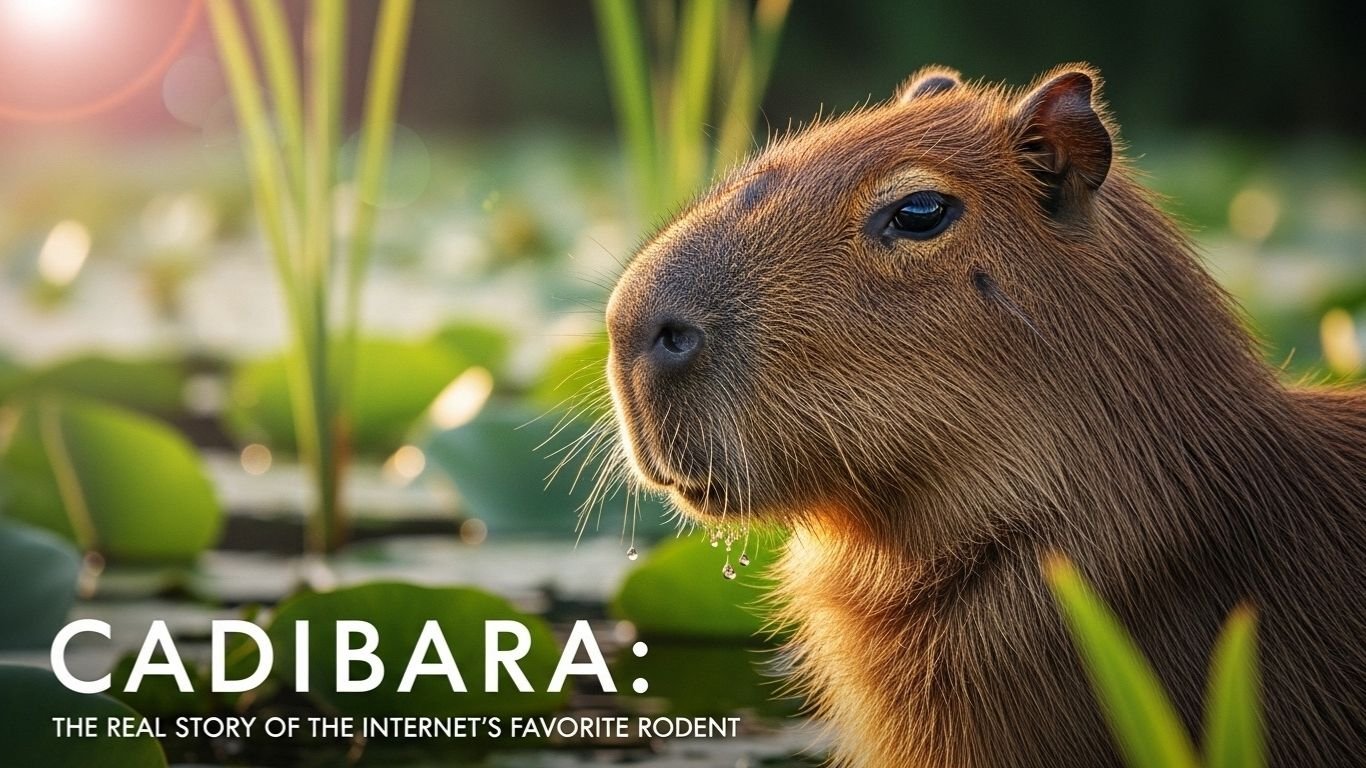
If you’ve spent any time on social media, you have likely seen a video of a large, serene animal chilling in a hot spring or calmly letting other animals perch on its back. Many people call this creature a “cadibara.” But when you search for it, you find information about a “capybara.” This can be confusing. Are they the same animal? Is one just a nickname?
Let’s clear things up. “Cadibara” is a common misspelling of capybara, the world’s largest rodent. This article will explain everything you need to know about this fascinating animal—why the name gets mixed up, its unique traits, and why it has become an internet sensation.
What is a Cadibara? The Animal Behind the Name
To put it simply, there is no animal species called a cadibara. The term is a popular, informal spelling that arose from how the word “capybara” sounds. When you see a post or meme about a cadibara, the animal featured is always a capybara, whose scientific name is Hydrochoerus hydrochaeris.
Search engines like Google are smart enough to understand this. They recognize that users searching for “cadibara” are looking for information about the capybara. So, don’t worry, you’ve come to the right place. We’ll explore the real animal that has captured the hearts of millions online.
Physical Characteristics of the Capybara
Capybaras have a distinct look that sets them apart from any other rodent. Their appearance is perfectly suited for their semi-aquatic lifestyle.
Size and Shape
As the largest living rodent, an adult capybara is surprisingly big. They can weigh between 77 to 176 pounds (35 to 80 kg) and stand about two feet tall at the shoulder. Their bodies are heavy and barrel-shaped, which helps them float easily in water. They have short, sturdy legs and a very small, almost unnoticeable tail.
Fur and Feet
A capybara’s fur is coarse, sparse, and typically reddish-brown. This type of coat dries quickly, which is a huge advantage for an animal that spends so much time in the water. One of their most interesting features is their partially webbed feet, making them excellent swimmers.
A Head Built for Water
Perhaps the most telling sign of their aquatic life is the placement of their eyes, ears, and nostrils. All three are positioned high on their head. This allows them to keep their body submerged while still being able to see, hear, and breathe. It’s a clever adaptation that helps them watch for predators while staying cool in the water.
Natural Habitat and Range
Capybaras are native to South America, where they are found in nearly every country east of the Andes Mountains. Their range includes Brazil, Argentina, Venezuela, Colombia, Peru, and Paraguay. They thrive in areas with abundant water.
You will almost always find them near rivers, lakes, marshes, and swamps. These wetland environments provide everything they need: water for drinking and safety, and plenty of grasses to eat. During the wet season, they roam across flooded grasslands, but in the dry season, they gather in larger groups around permanent water sources.
Social Behavior and Group Dynamics
Capybaras are incredibly social animals. They live in groups that usually number between 10 to 20 individuals, though some groups can swell to over 100 members. These groups are complex social structures led by a dominant male. The rest of the group includes several females, their young, and a few subordinate males.
Living in a group offers safety in numbers, making it harder for predators like jaguars, caimans, and anacondas to single one out. They communicate through a series of sounds, including barks, whistles, and purrs. Their famously calm demeanor allows them to coexist peacefully not just with each other, but with many other species as well. It’s common to see birds, monkeys, and even turtles hanging out near or on a capybara.
Diet and Unique Feeding Habits
What does the world’s largest rodent eat? Capybaras are herbivores, meaning they only eat plants. Their diet consists mainly of grasses and aquatic plants. They graze for several hours a day, usually during the cooler morning and evening hours.
They also have a rather unusual digestive habit called coprophagy. This means they eat their own feces. While it might sound strange, it is a vital part of their nutrition. This process allows them to extract the maximum amount of nutrients from the tough plant fibers they consume. It’s a bit like a cow chewing its cud, just a different method for getting the most out of their food.
Why Do People Say “Cadibara” Instead of “Capybara”?
The mix-up between “cadibara” and “capybara” is a perfect example of how language evolves online. The primary reason is pronunciation. In Spanish and Portuguese, the native languages of the capybara’s habitat, the “py” sound is softer than in English. To many ears, it sounds more like “di” or “dy.”
When people hear the word in a video or documentary without seeing it written down, they spell it how it sounds. Social media then amplifies this. Once a few popular posts use “cadibara,” the term spreads like wildfire. It becomes a familiar, accepted alternative, even if it’s technically incorrect.
The Capybara’s Rise to Internet Stardom
Few wild animals have achieved the level of internet fame that the capybara has. Their calm, unbothered attitude makes them incredibly photogenic and relatable. Memes often portray them as symbols of peace, relaxation, and mindfulness.
Viral videos have played a huge role in their popularity. A clip of capybaras relaxing in a Japanese hot spring (yuzu-yu) became an international sensation. Another popular trend shows them acting as a “chair” or “ottoman” for other animals. This gentle nature makes them seem like the most chill animal on the planet, a reputation that resonates with many people.
Conservation Status and Threats
According to the International Union for Conservation of Nature (IUCN), capybaras are listed as a species of “Least Concern.” This means their population is currently stable and they are not considered endangered.
However, they still face threats. The biggest danger is habitat loss from deforestation, farming, and urban sprawl. In some regions, they are also hunted for their meat and hide. Protecting their wetland homes is crucial to ensuring that these gentle giants continue to thrive for generations to come.
Fun Facts About the Capybara
- Nature’s Ottoman: Their calm demeanor and sturdy build make them a popular resting spot for other animals, earning them this funny nickname.
- They Can Sleep in Water: Capybaras can fall asleep in the water, leaving just their noses exposed to the air.
- Their Teeth Never Stop Growing: Like other rodents, their front teeth grow continuously. They keep them worn down by grazing on tough plants.
- Great Swimmers: A capybara can hold its breath underwater for up to five minutes, a useful skill for escaping predators.
Conclusion: A Gentle Giant Worth Knowing
Whether you call it a cadibara or a capybara, there is no denying the appeal of this unique animal. It serves as a wonderful reminder that survival doesn’t always have to be about aggression. The capybara thrives through community, calmness, and a deep connection to its environment.
Understanding the story behind the name “cadibara” not only clears up confusion but also highlights how digital culture shapes our relationship with the natural world. The next time you see a post about this serene rodent, you’ll know the full story of the internet’s favorite gentle giant.
Frequently Asked Questions (FAQs)
What is the difference between a cadibara and a capybara?
There is no difference. “Cadibara” is a common misspelling of “capybara.” Both terms refer to the same animal, the world’s largest rodent.
Where do capybaras live?
Capybaras are native to South America and live in dense forests near bodies of water, such as lakes, rivers, swamps, and marshes.
Are capybaras friendly?
Capybaras are known for their docile and gentle nature. They are highly social and often coexist peacefully with many other animal species and are generally not aggressive towards humans.
What do capybaras eat?
They are herbivores, and their diet consists mainly of grass and aquatic plants. They graze during the morning and evening.
Can you have a capybara as a pet?
While some people keep them as pets, it is not recommended. Capybaras have complex needs, including a large outdoor space, a pool of water, and the companionship of other capybaras to thrive. These conditions are difficult for the average person to provide.